#122 • UK WWI Detained Enemy Alien Prison Camp Bone Art: Lot of Four
Part of TRENCH ART & WWI Memorabilia (live auction by Bannerman Auctions)
High bid $80.00
Status: SOLD
Category: Britain
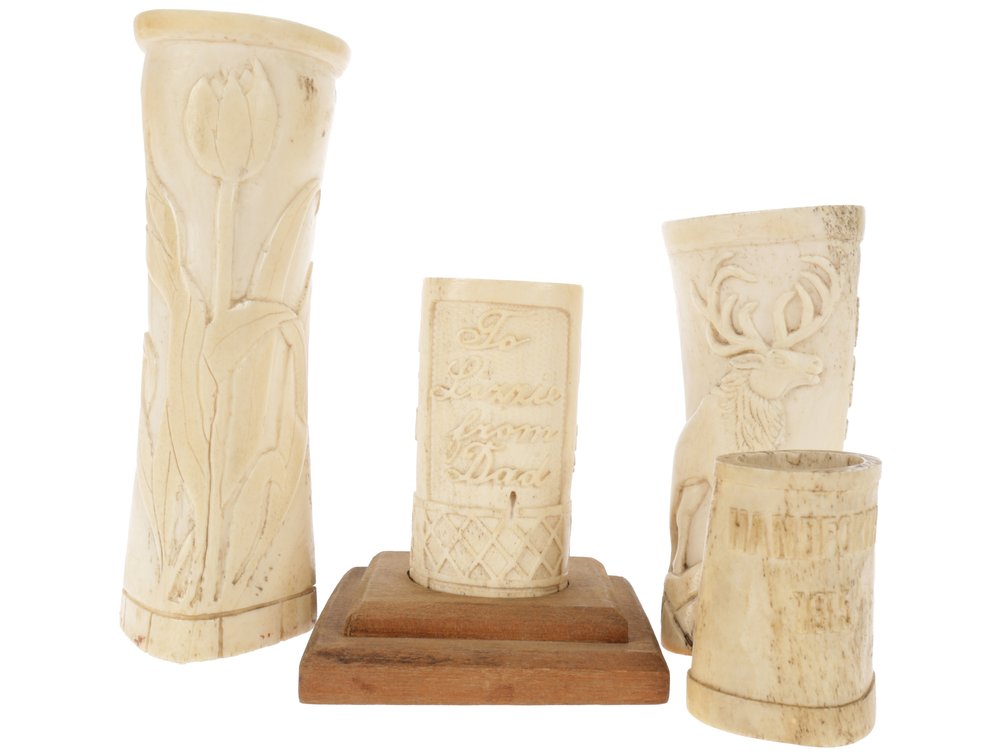
UK WWI Detained Enemy Alien Prison Camp Bone Art: Lot of Four. Four examples; first is 12cm tall and features a nicely detailed stag. Second is 16.5cm and features a simple floral motif. The third 6cm tall with inscriptions "HANDFORTH 1915" on one side, and "GERTRUDE" on the other. There is a check or crack in this one on Gertrude's side of the bone (also home to a simple Scottish thistle and floral motif), but it does not appear to threaten the structural integrity of the piece. The fourth is 10cm tall on a fitted wood base, with floral motifs and inscription "To Lizzie from Dad". During the First World War, the British government detained an estimated 30,000 to 35,000 “enemy aliens,” primarily German and Austrian nationals, as a precaution against espionage and internal unrest. These civilians were held in a network of internment camps across Britain and the Isle of Man, including major sites such as Knockaloe Camp, one of the largest internment complexes in Europe, and Stobs Camp in the Scottish Borders. Although they were not prisoners of war, many detainees experienced long periods of confinement, which led to the development of organized activities intended to maintain morale and provide structure to daily life. One notable result of this environment was the creation of what is now referred to as “bone art.” Internees collected discarded animal bones from camp kitchens and transformed them into finely carved objects such as miniature sculptures, jewelry, and decorative items. These pieces were sometimes sold at camp exhibitions or fairs attended by local British civilians, offering a rare opportunity for interaction with the outside world. The income generated allowed detainees to purchase small comforts such as tobacco and sweets, while the creative process itself helped relieve boredom and sustain a sense of purpose under restrictive conditions. Handforth, near Wilmslow in Cheshire, was one of Britain’s larger First World War camps for enemy prisoners, created by converting an industrial complex (described in sources as a former print works or rubber factory) into an internment and POW compound. It initially held German civilian enemy aliens but soon also housed military and naval prisoners, with the population rising from roughly a thousand men in late 1914 to around two thousand or more in 1915, and later peaking in the high two thousands. Handforth is consistently treated in modern accounts as a major, long‑running British site for both civilian internees and military prisoners, comparable in importance to well‑known camps such as Donington Hall or Lofthouse Park. Estimate $150 - $250