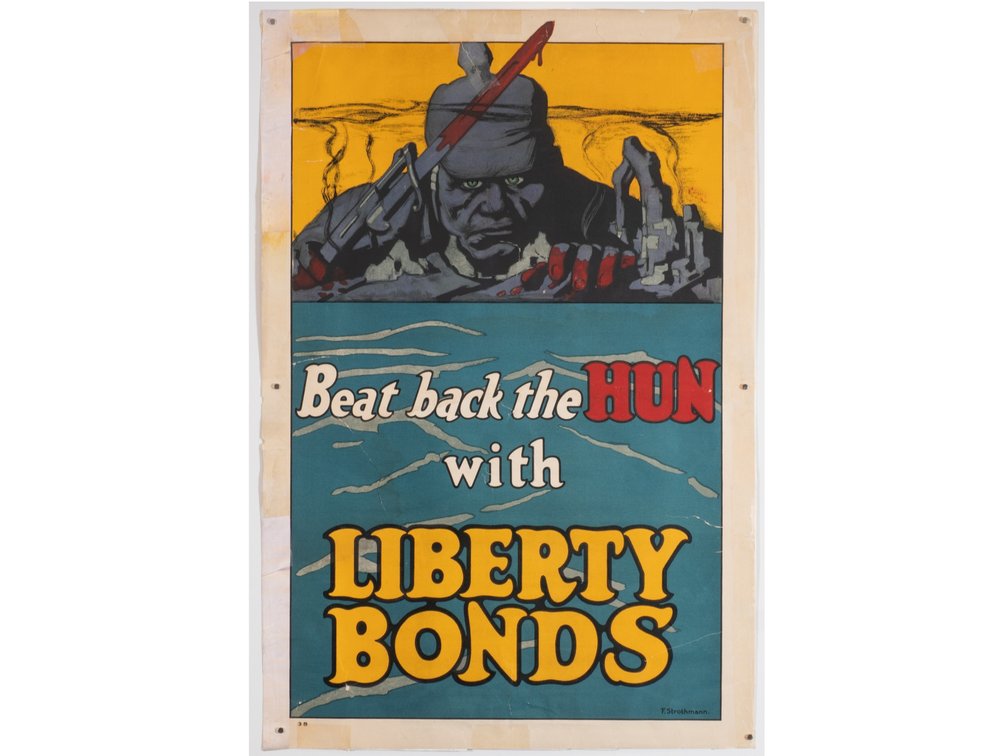
#121 • "Beat Back the Hun" Original U.S. WWI Liberty Bonds Poster, by Frederick Strothmann
Part of The Art of War and Peace - A No Reserve Poster Auction (live auction by Bannerman Auctions)
High bid $140.00
Status: SOLD
Category: United States
"Beat Back the Hun" Original U.S. WWI Liberty Bonds Poster, by Frederick Strothmann Description: This iconic piece of World War I propaganda, designed by artist Frederick Strothmann for the 1918 Fourth Liberty Loan campaign, remains one of the most visually striking examples of American wartime illustration. This propaganda poster features a menacing, stylized depiction of a "Hun", a German soldier with blood-stained hands and bayonet, looming over the Atlantic toward the American coastline. Its aggressive use of high-contrast color and visceral imagery was specifically engineered to provoke a sense of immediate threat, successfully driving civilian investment in war bonds. Condition: The poster shows clear horizontal and vertical fold lines, which are standard for original WWI posters as they were folded for distribution to post offices and shops. There is visible edge wear, minor creasing, tears in the image are, water staining, and taped and reinforced edges. It is unclear if there is any paper loss under the reinforcement. The colors appear bold and relatively well-preserved. Dimensions: Approximately 20 x 30 inches Artist: Frederick Strothmann (1872–1958) Publisher: US Department of the Treasury Date: 1918 Estimate: $150-$250 Artist Biography: Frederick Strothmann (1872–1958) was a prolific American illustrator and portrait painter best known for his biting political cartoons and commercial advertisements during the early 20th century. Born in Berlin and later settling in New York, he developed a versatile style that transitioned seamlessly between whimsical magazine illustrations and somber, high-stakes wartime propaganda. By 1900, he had established himself as a mainstay in the American periodical market, contributing regularly to major publications such as The Saturday Evening Post, Collier’s, Life, Harper’s Magazine, and Good Housekeeping. While he gained significant recognition for illustrating books by legendary authors like Mark Twain, he is most enduringly remembered for his visceral contributions to the Liberty Loan campaigns during World War I. His ability to blend realism with exaggerated, emotionally charged symbolism made him a definitive voice in the Golden Age of Illustration, leaving behind a body of work that captured the anxieties and cultural shifts of a nation in transition.