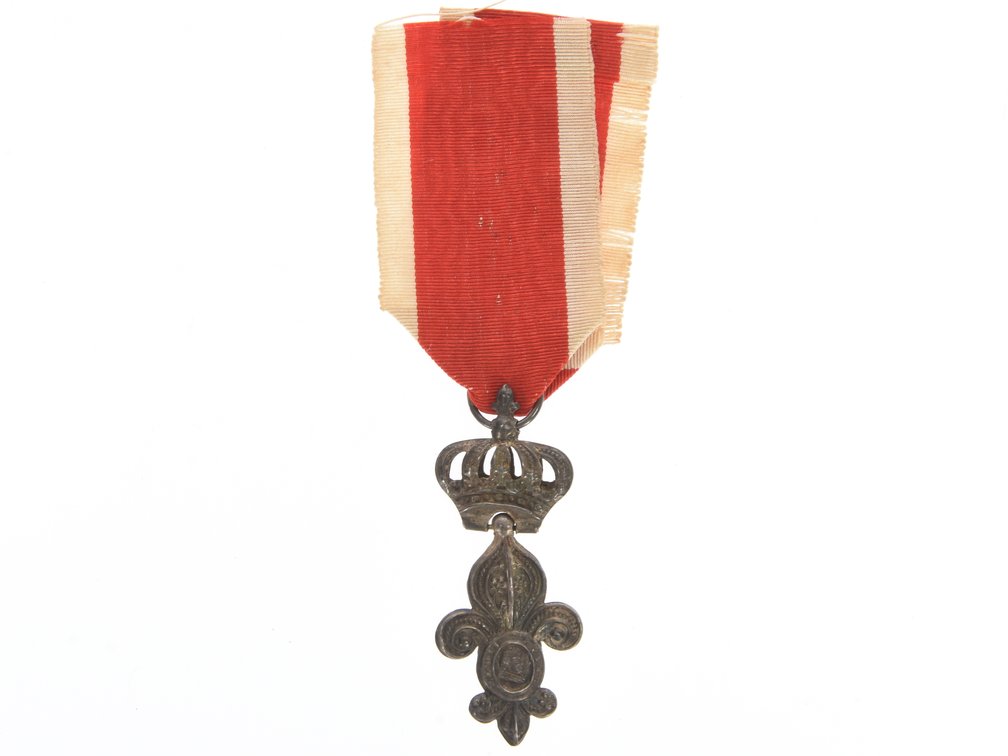
#17 • French Order of the Lily: Early 19th Century Example
Part of British & World Medals (live auction by Bannerman Auctions)
Starting at $150.00
Status: No sale
French Order of the Lily: Early 19th Century Example. French Order of the Lily medal (circa early 19th century). Lightweight silver fleur de lys surmounted by crown. Medal measures 39mm (tall) x 18mm (wide) and is presented on period ribbon. Medallion at center of fleur de lys features portrait of King Louis XVIII. Estimate: $300 - $400 Historical Background: The French Order of the Lily (Ordre du Lys) was a short-lived military decoration created on April 26, 1814, by the Comte d'Artois (later King Charles X), acting as Lieutenant General of the Kingdom. This order was instituted to reward the National Guard of Paris for their service in defending the city, maintaining order, and protecting the royal family during the period of the Bourbon Restoration after Napoleon's first abdication. Though intended as a symbol of restored monarchy, the order was later merged or superseded by other honors as the political situation in France evolved. Central to the symbolism of the order is the fleur-de-lis, which translates to "lily flower." This motif has deep historical roots in France, traditionally symbolizing royalty and the divine favor bestowed upon the nation. The emblem is frequently associated with the Holy Trinity, with its three petals often interpreted as representing faith, wisdom, and chivalry. The use of the lily in this order signified the return to traditional royal iconography and served as a powerful visual reminder of the Bourbon dynasty's historical claim to the French throne.