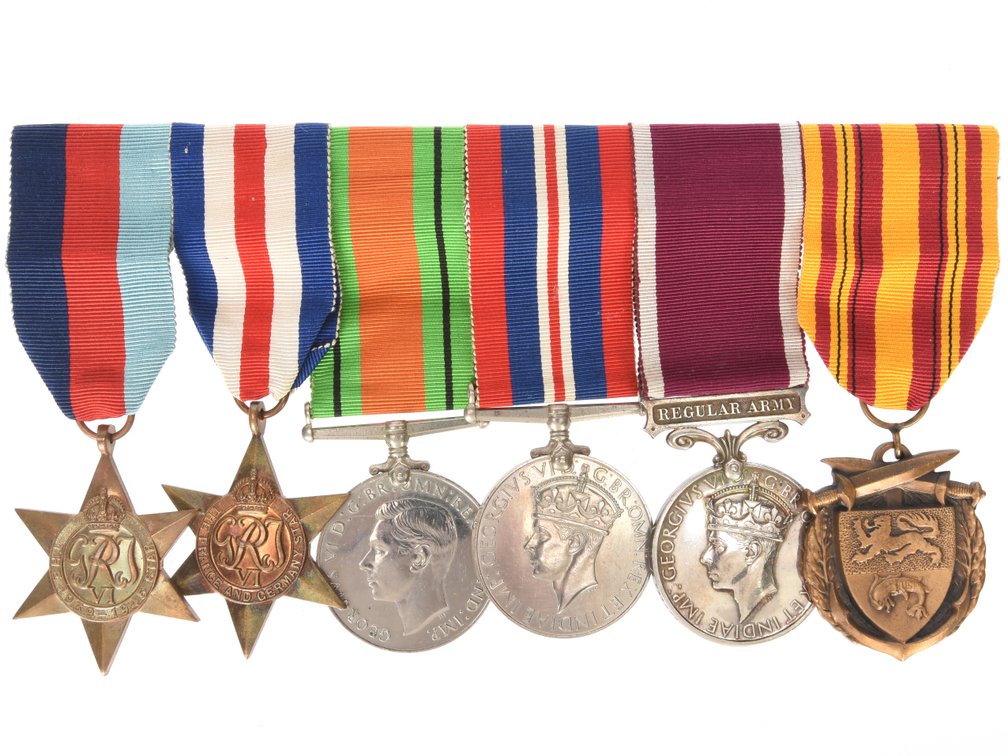
#277 • British WWII Medal Group: Royal Artillery.
Part of British & World Medals (live auction by Bannerman Auctions)
High bid $130.00
Status: SOLD
British WWII Medal Group: Royal Artillery. British 6-medal wearing mount World War II medal bar identified to Staff Sergeant H.F. Bridle, Royal Artillery. Bar includes; 1.) 1939-1945 Star medal, 2.) The France and Germany Star medal, 3.)1939-1945 Defense Medal, 4.) 1939 - 1945 War Medal, 5.) Long Service and Good Conduct Medal with "REGULAR ARMY" top, named (impressed) "2315768 S. SJT. H.F. BRIDLE. R.A,", and 6.) Dunkirk Medal (Medaille Dunkerque 1940) (unofficial commemorative medal created by the town of Dunkirk to commemorate the defense of the town and surrounding area during May and June 1940). Estimate: $150 - $250 Historical Background: A British World War II Medal Group to the Royal Artillery is a collection of campaign and service medals awarded to a soldier who served in the Royal Artillery during the Second World War, which lasted from 1939 to 1945. These groups typically include the core British campaign medals of the era, such as the 1939-1945 Star, the Atlantic Star, or the Defence Medal, depending on the recipient's specific service, which could have involved various theaters and duties like counter-mortar radar detachments or service in the Middle East. This medal group serves as a tangible record of the individual's military service and contribution to the war effort. While standard campaign medals were issued to many servicemen, the group may also contain awards for gallantry or distinguished service, such as the Military Medal or Military Cross, which signify acts of bravery or leadership while serving in the Royal Artillery. The specific combination of medals within the group tells the unique story of the soldier's campaigns and their dedication to service. The Royal Artillery played a vital role during the Battle of Dunkirk in World War II, which culminated in Operation Dynamo, the evacuation of over 338,000 Allied soldiers from the French port between May 26 and June 4, 1940. As German forces rapidly advanced, artillery units were instrumental in providing essential covering fire. Their defensive actions helped to maintain a perimeter, allowing the British Expeditionary Force and French troops to retreat toward the beaches and await evacuation. Heavy shelling by German artillery, which had come within range of Dunkirk, was a continuous threat throughout the evacuation, necessitating the Royal Artillery's sustained efforts. The bravery and sacrifice of these gunners were critical in the successful, though arduous, operation. The unit's efforts ensured the bulk of the Allied fighting force survived to continue the war, providing a massive boost to British morale at a critical juncture of the conflict.