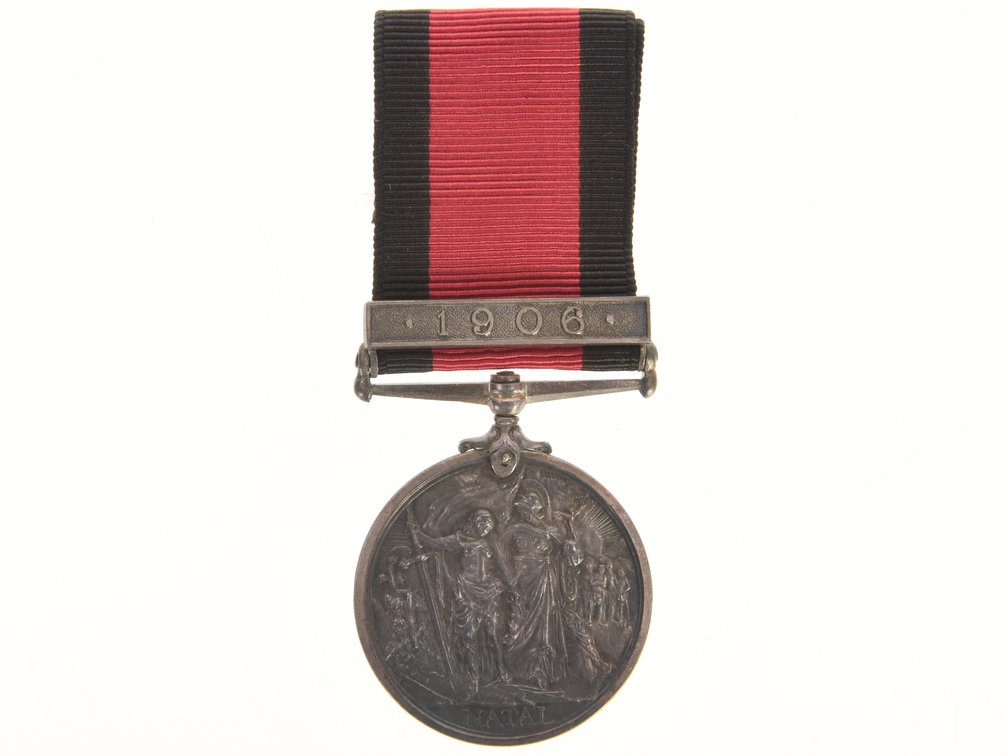
#203 • Natal Native Rebellion Medal-Natal Carbineers
Part of British & World Medals (live auction by Bannerman Auctions)
High bid $180.00
Status: SOLD
Natal Native Rebellion Medal-Natal Carbineers British Natal Native Rebellion campaign medal- with 1 clasp/bar being "1906". Medal named (impressed) on rim "TPR: J.LOCKE, NATAL CARBINEERS" in capital block letters. Medal exhibits dark even toning, some slight polishing wear, and is in very fine condition. Medal presents proper ribbon. 878 medals with bar were authorized to this unit. Estimate: $200 - $300 Historical Background: The Natal Native Rebellion Medal was a British campaign medal authorized by King Edward VII on May 9, 1907. It was instituted by the Natal Government for service during the 1906 Zulu revolt against British rule and taxation, also known as the Bambatha Rebellion. The medal was awarded to military and police forces in the Colony of Natal, as well as volunteers from the Transvaal and Cape Colony. A total of approximately 9,979 medals were issued. A clasp displaying the year "1906" was awarded to those who served for more than fifty days during the campaign. Notably, twenty members of the Indian Stretcher Bearer Corps, including Mahatma Gandhi, received the medal without the clasp. Struck in silver, the medal is a 36 millimeter diameter disk. The obverse features the uncrowned head of King Edward VII facing right, surrounded by the legend "EDWARDVS VII REX IMPERATOR". The reverse depicts the figures of Britannia and Natalia, standing with a sword on a heap of native weapons, set against a background showing Zulu men, huts, and a sunrise, with the name "NATAL" in the exergue. Designed and manufactured by the Goldsmiths and Silversmiths Company of London, the medal is suspended by a 32 millimeter wide crimson ribbon with seven millimeter wide black edges. The recipient's name and details were inscribed on the rim. The Bambatha Rebellion, also known as the Zulu Rebellion, was an uprising against British colonial rule in the Colony of Natal, South Africa, in 1906. The conflict was primarily sparked by the introduction of a regressive Poll Tax of £1, which compounded existing economic distress, land grievances, and social discontent among the Zulu population. Chief Bambatha kaMancinza of the amaZondi clan led the revolt after being deposed for refusing to pay the new tax. He fled to the Nkandla Forest, where he was joined by other disaffected chiefs and warriors, forming an insurgency against the colonial administration. The colonial response relied on the Natal Militia, including units like the Natal Carbineers, under the overall command of Colonel Duncan McKenzie. The Natal Carbineers saw extensive active service throughout the conflict, participating in counterinsurgency operations and the decisive Battle of Mome Gorge on June 10, 1906, where the poorly armed rebels were surrounded and defeated. This military campaign resulted in a heavy toll, with 3,000 to 4,000 Zulus killed and thousands more imprisoned or flogged. The brutal suppression of the rebellion effectively ended large-scale armed resistance against white colonial rulers in South Africa and contributed to the movement toward the Union of South Africa in 1910.