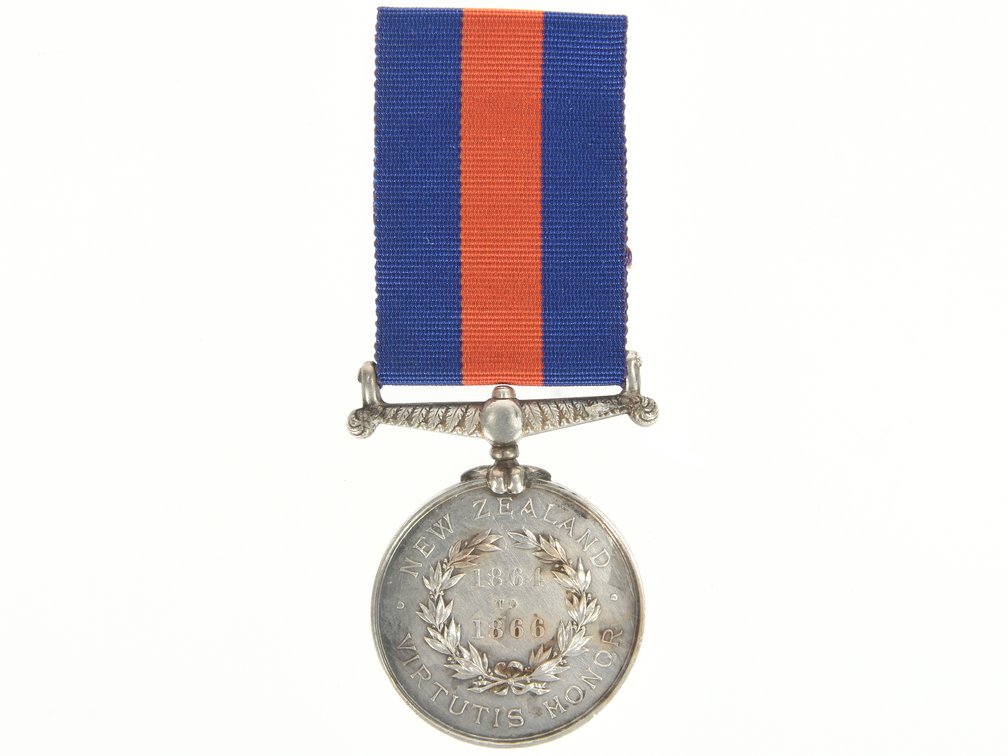
#164 • New Zealand Medal 1864-1866 - 43rd Light Infantry
Part of British & World Medals (live auction by Bannerman Auctions)
High bid $325.00
Status: SOLD
New Zealand Medal 1864-1866 - 43rd Light Infantry British New Zealand campaign medal with 1864-1866 reverse. Medal named (officially impressed) on rim "259 JOHN BROOK. 43RD LT INFTRY" in capital block letters. Medal exhibits toning (with some spotting), some polishing wear, and is in very fine condition. Medal presents proper ribbon. The 43rd Light Infantry led the storming column at Gate Pa and took part in the assault on the fort at Te Ranga in June of 1864. Estimate: $400 - $600 Historical Background: The New Zealand Medal, often referred to as the New Zealand War Medal, was a British Empire campaign medal established in 1869. It was awarded to both Imperial and Colonial troops who were involved in the New Zealand Wars, which took place during the periods of 1845–47 and 1860–66. These conflicts were also known historically as the Māori Wars, Anglo-Māori Wars, or Land Wars. While a British award, the New Zealand Medal is recognized as the first New Zealand campaign medal, acknowledging service in what were complex and significant conflicts in New Zealand's history. The total number of medals issued was approximately 4,400. The medal itself is a silver disk measuring 36 mm in diameter. Initially, eligibility was for British troops, but it was extended in 1871 to include New Zealanders who served during the 1860s period of the wars. The medal was presented by the United Kingdom of Great Britain and Ireland. This decoration marks a key point in the recognition of military service in New Zealand and is distinct from later awards such as the New Zealand War Service Medal or current bravery decorations. The 43rd (Monmouthshire) Regiment of Foot Light Infantry arrived in New Zealand in December 1863, having traveled from India to participate in the New Zealand Wars. The regiment initially split into detachments for duty on the Great South Road before being stationed in the Bay of Plenty. Their major combat engagements began in April 1864, including a skirmish at Maketu before the disastrous frontal assault on Gate Pa, or Pukehinahina, on April 29. During the battle for Gate Pa, approximately 300 men of the 43rd took part, suffering heavy losses including the death of their commanding officer, Lieutenant Colonel Henry Booth, and numerous other casualties. The regiment later redeemed itself in the decisive Battle of Te Ranga on June 21, 1864, where elements of the 43rd Light Infantry successfully captured the Maori entrenchments after fierce hand to hand fighting. It was for his actions at Te Ranga that Captain Frederick Augustus Smith of the 43rd was awarded the Victoria Cross for bravery. Following the battle, the Tauranga Maori made peace with the British, and the 43rd was relocated for garrison duty in the Taranaki District. The 43rd Light Infantry ended its service in New Zealand in March 1866, embarking for England after nearly fifteen consecutive years of foreign service.