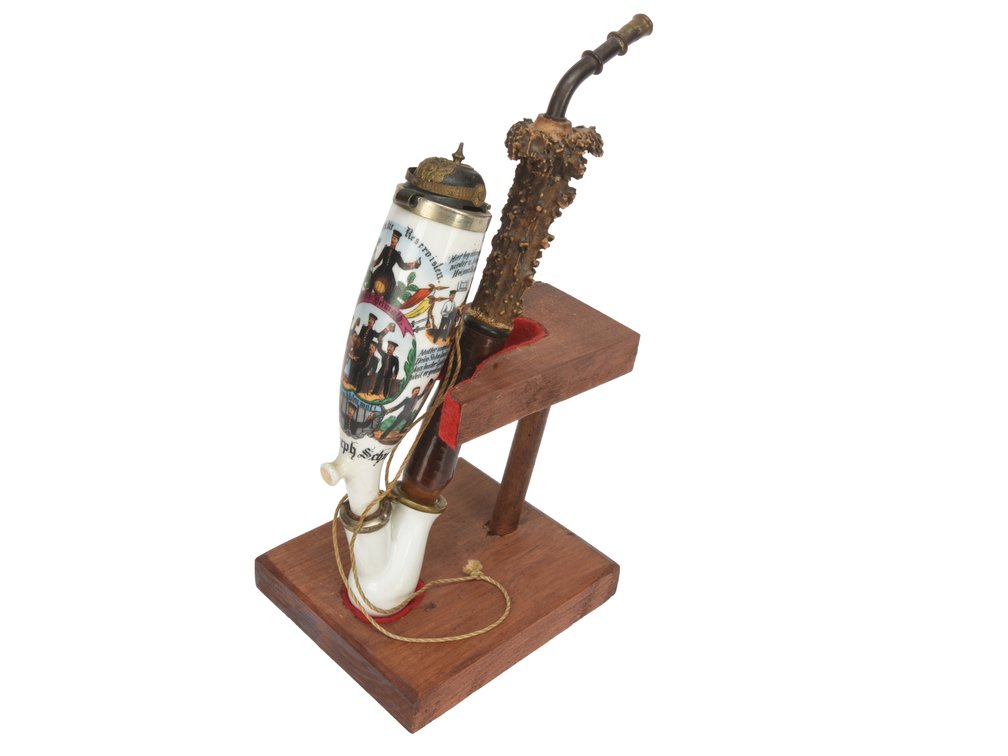
#146 • Imperial German Infantry Regiment 29 Reservist's Pipe
Part of Ghosts of the Great War: A No-Reserve Auction of WWI Militaria (live auction by Bannerman Auctions)
High bid $400.00
Status: SOLD
Category: Imperial Germany
Imperial German Infantry Regiment 29 Reservist's Pipe JR 29 Reservist's souvenir pipe has a short but nice quality stag horn stem. Bowl is adorned with martial vignettes and a roster of this reservist's unit: 3rd Company, Infantry Regiment Nr. 29 'Von Horn', from 1902 / 1904. Bowl has a pickelhaube motif metal lid. Includes a collector's custom made display stand. The pre-World War I Imperial German Army operated a highly structured reservist system, a key feature of German conscription and national defense policy. Young men typically began their military involvement between ages 17 and 20 with a period of compulsory active service, usually lasting two to three years depending on the branch. Upon completion of this active duty, they entered the reserves, where they remained subject to periodic call-up and annual training for several more years—often until about age 27. Afterward, they moved through subsequent reserve tiers, with liability for military service extending until age 45. This structure ensured a vast pool of trained men could be mobilized rapidly in the event of war, providing the backbone of Germany’s military might leading up to 1914. The reserve system promoted strong group identity, as men served and trained within the same units throughout their service and into their reserve obligations. Souvenir items such as regimental (or reservist) steins, flasks, and pipes are closely tied to this reservist tradition. As men left active duty and transitioned into the reserves, it became customary—though only financially feasible for a portion—to commission ornate, personalized keepsakes commemorating their service. These souvenirs were not last-minute tokens, but carefully planned, costly mementos produced over several months. The tradition peaked between roughly 1890 and 1914. Steins and flasks, often bearing the regiment’s name, years of service, insignia, and sometimes the roster of men from their unit, functioned as tangible testaments to camaraderie and shared military identity. Their creation reinforced the lasting bonds formed in service, with only about one in ten reservists able to afford such items. Once completed, these keepsakes were proudly displayed at home, symbolizing military pride and the enduring connection to one’s comrades and regiment. $100 - $200